Please don’t share this page with others as it is intended only for those who have purchased Dwight Clough’s How to Write and Publish Your Book course…
Lesson #6
How to get it done: Advice for tackling your first book
I don’t usually tell people this, but since you’ve paid to learn my secrets, here goes:
My first book was a topical arrangement of the law of Moses in the Old Testament of the Bible. It took two years to create. Then I tried to shop it around to publishers for the next three years. They were smart enough to connect the dots…
Nobody cared. My book had a total readership of ten people. Maybe. So, no, it didn’t get published. If it survived the garage fire, it’s in a box somewhere in storage. I wrote it back in 1978. Longhand. My mom typed it for me on an IBM Selectric.
My second book was a novel about two brothers who took over a planet. I wrote that circa 1986 on my TRS80 computer and printed it out on a dot matrix printer.
It was terrible.
In 1991 I became a dad. For some reason my writing started to improve about that time. I actually won a national writing contest that year. I still have the plaque in my office. Maybe my writing got better because I finally had something to say.
For the next eight years I wrote story after story, and I slowly assembled them into my third book, Weathering Storms.
This was the first time I published a book. Actually, I self published. A friend created a cover image. My six year old son supplied an image for the spine. A friend with Photoshop designed the cover. And a printer friend of mine printed 250 copies of my book for free. Wow!
A few people read it and liked it. “Your book is therapy for me…you have struck gold…there is ‘life’ in your book,” one person said. Another reader wrote, “You owe it to our fellow human beings to get your book in their hands so they can read your words… Thank you for your great, inspiring book.”
Hmm.
That was 1999. I ask myself: Why did it take me eight years to crank out this book? Really, when you think about it, it took me 21 years because I wanted to write books from the day I graduated from college in 1978.
21 years. Way too long. I don’t want it to take you twenty-one years to publish your first book. Let’s get your book across the finish line for you.
Twenty-one years. Compare that to now. A couple weeks ago I wrote—well, mostly I compiled—and published a book over the weekend. It’s my book Adding Value: Insights and Opportunities to Empower You
In the book I offer free guidance on how to write and publish your book. (You get much more here because you bought the course.)
I explain how you and I can work together to end poverty.
I show you how you can get better results from your Christian faith. I explain how to bring your hurts to God, how to forgive people who have hurt you, how to hear the voice of God, why choosing Jesus makes sense, and much more.
I give basic guidance on how to read and understand the Bible, and help you get started with that process.
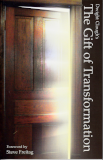
I share my award-winning story about our first miscarriage and my very popular story, “Good News of Great Joy,” as well as snippets from The Gift of Transformation, Dove for President, The Tyrannosaurus Who Wanted to Be a Vegetarian, and more.
It’s a good book. I’m proud of it. And here’s the thing: I got the idea on a Saturday. By Monday it was published. I got it done.
That’s not my record though. One time I wrote and published a book in less than 24 hours. Here’s the story…
How I wrote AND published a book in less than 24 hours
I wrote and published a book in less than 24 hours. Yes, this is a real book, perhaps the only one of it’s kind. It’s a 6 x 9, 110-page paperback called The New Middle: A fusion of left and right politics and a call of sanity and civility in public discourse. It’s available for purchase on Amazon.
Let me tell you the story behind it…
Why I wrote it
For a long time I have been troubled about the state of politics here in the United States. It seems to be that we are becoming increasingly polarized in our political views. Anger is on the rise. Listening is on the decline. We are becoming a nation of rich vs. poor, Christian vs. secular, gay vs. straight, liberal vs. conservative, black vs. white, and so on. And the media feeds these conflicts by focusing the spotlight on them. Conflicts sell and news organizations know this.
A case in point happened right in front of me when I was helping with Hurricane Katrina relief a few days after that storm. Here’s an excerpt from the book that explains:
I was in Waveland, Mississippi a few days after Hurricane Katrina. Leaving Interstate 10, I drove across downed power lines through a surreal landscape. A house was upside down in a tree. Entire neighborhoods had disappeared. On the side of the road, automobiles were stacked like children’s toys thrown about. Some of them were half buried nose first in the mud. Some were upside down. I worked in an emergency FEMA center set up in the parking lot of a shopping center. Next to us was a field hospital, separated from us by barbed wire and cars bulldozed together. One of those cars was a new Mercedes. A few days after we arrived, someone found dead bodies on the roof of the big box store less than 100 yards from where I was working. I was surrounded by people whose homes, possessions and families carried away by a 35-foot wall of water that crossed the beach from the Gulf of Mexico.
Every person had a story. One woman I talked to was having heart surgery when the wall of water hit. They released her from the hospital a couple days later. She had nowhere to go. She was sleeping on the street. Many of the people I talked to earned between five and ten thousand dollars a year. With that income they managed to own a home that was not insured; a home that no longer existed. This disaster was bigger than anything FEMA was prepared to handle. As an agency, it hardly knew where to begin. All the procedures it had in place worked fine for a “normal” disaster. But this was not a normal disaster.
With people homeless and helpless, you would expect that the National Guard troops deployed there in Waveland would be busy quelling riots and looting. But that wasn’t the Mississippi I experienced. Instead, I found a people warm and generous. People who had nothing left in life but two bottles of water were offering me one of them. In the midst of extraordinary hardship, I found people to be courteous, grateful and in good humor.
To be honest, I was blown away.
Seated not far from me was an Associated Press photographer. I told him about the house upside down in the tree, but he wasn’t interested. I told him about a boat stuck bow first in the earth, but he waved me aside. It wasn’t the kind of photograph he was looking for. After waiting for most of a day, he finally found it. After processing scores of people, someone came into the FEMA center angry. Did she have a right to be angry? Probably. She was yelling, and yelling was the exception, but that didn’t matter. What mattered was the photographer finally got the story he was looking for. He moved up close, got his camera in the right angle, started shooting and that angry face hit newspapers all over the nation.
This polarization deeply concerned me. (And, of course, it has only gotten worse since.)
I call my book a fusion of left and right politics because I love many of the causes of the Left (who can argue with the need for everyone to have access to health care—of course we want that) and embrace many of the values of the Right (a support for life, financial responsibility and so on).
Despite having these strong views, I find it difficult to even carry on a conversation with my friends on politics because this is such an explosive topic. This is just plain wrong. We ought to be able to listen to each other and come up with creative ways to come together. We ought to be Americans first, and Democrats or Republicans second.
These thoughts had been swirling around in my head for a long time. They came into sharp focus during the bitterly contested Scott Walker recall election here in Wisconsin.
That’s why I wrote the book.
I should probably add that I did not write the book with the idea that it will become a best seller and I will get rich as a result. What matters to me is this: I took a step to correct a serious problem. Hopefully a few people will read this and add their own personal momentum to this movement. If enough people do that, our culture can change, our nation can change. That’s what I care about.
Since I wrote it, I wrote another book, Dove for President. I consider it a better book on the subject, but, of course, you’re welcome to buy and read either one or both.
Why 24 hours?
I’m busy; you’re busy; we’re all busy. As much as I care about these issues, my main focus as a writer is on Christian educational and inspirational literature. I didn’t want to take weeks out to pursue what for me at the time would have been a career bunny trail. But I could afford to take a day off and focus on something I cared about. So I made the decision to write and publish this book in 24 hours.
How I did it—the writing part
How do you write a 110-page book in one day? First of all, it helps if you write everyday. If you do, you get used to writing, and writing a larger chunk of material in one day doesn’t seem like an impossibility. Second, though I don’t keep a journal, I do write notes, letters, blog entries and articles frequently. I try to keep all this where I can find it if I need it. As a result, I didn’t need to start from scratch. In some cases, I was able to take material I had already written and rewrite it for the purpose of my book. Third, I didn’t feel the need to fill every page with my thoughts. I left plenty of room for my readers to fill in their thoughts. I like making a book interactive when I can because I think readers will get far more out of it. Fourth, and most importantly, I just made the decision to write this in one day. It was do or die. Either I get it done, or I scrap the project. I determined early on that the book might not be perfect, but it will get done. I told myself that I would not go to bed until the book was written and published. It’s amazing what you can do if you really want to do it.
By giving myself permission to write a less-than-perfect book in one day, I got the job done. But as I reread what I had written, and as others read it, I was happy with the job I had done. People told me it held their attention and got them thinking. Good deal. I like that.
How I did it—the publishing part
When I first started as an author, getting published was an almost impossible task that took months or even years. Back in the day, you had to type your entire manuscript on a typewriter. If you made a mistake, you had to type that entire page over. Most publishers would only accept original typewritten copies. (Remember, no computers, no word processing. Just typewriters.) Publishers would not accept photocopies. Nor would they allow you to submit your manuscript to more than one publisher at a time. You sent in your manuscript hoping it didn’t get lost in the mail. (Who had time to type the whole thing over again?) After several months of fretting, most authors needed to send the publisher a polite letter asking if the manuscript had been reviewed. After two or three polite requests, the manuscript would be returned (assuming you had enclosed enough postage) with a form rejection letter and you started over. You had no way of knowing if your manuscript had even been read, or if it just sat a pile for eight months. Follow up letters to editors who rejected your work was a complete waste of time. Most authors went through this process multiple times before giving up or getting a one-sided offer that benefited the publisher and left the author out in the cold.
Now all of that has changed. You can be published in minutes not months. Multiple platforms allow you to do that. I’m most familiar with Amazon’s platform—a publish-on-demand service that allows you to create paperback books and e-books.
For this book, I used Create Space, Amazon’s previous service. Create Space has since been folded into Amazon’s digital printing platform. I followed the steps similar to the ones I will outline in detail later in this course.
I created a cover using GIMP, a free image processing software. I knew the trim size and calculated the spine thickness, added a bleed and calculated all of that out to 300 dpi. I converted it to pdf. Then I uploaded it to Amazon’s platform. The cover is nothing fancy. But I didn’t want to spend a lot of time on it. It worked for me.
I finished uploading the title information, set a price, set up my distribution channels and submitted the book for publication.
It usually takes a day or two for Amazon to get back with you. In this case, I did run into some technical issues that took me 45 minutes to fix. Then, the book was approved, and it became and remains available for sale on Amazon. It could also be ordered by bookstores or libraries.
What did all of this cost me?
- Money: nothing.
- Time: about 18 hours altogether. It was a long day and about 45 minutes out of another day. But I got it done, and I’m able to add another book to my list of published books.
I wrote and published a book in 24 hours. Could you do the same? Potentially. I’m not saying you should. You want to take the time it takes to do it right, but you also want to get it done. Here’s how…
How to get your book done
#1 Start with a plan. Know where you’re going and stay on track.
#2 Give yourself time—in most cases several months—to write your book. In some cases, it may even take a couple of years or more.
#3 Get something done every week. Most of us cannot write every day, but we can get something done every week.
#4 If you miss a week, don’t beat yourself up. Just get back to it the next week.
#5 Zig Ziglar said, “Everything worth doing is worth doing poorly until you learn to do it well.” Don’t worry if your first draft sucks. It’s just a first draft. No big deal. That’s why rewriting is part of your plan.
#6 Don’t worry about writer’s block. You can usually get around it by writing poorly (see the previous paragraph), starting in the middle instead of the beginning, or talking through the passage with a friend.
#7 Some people do better by recording their thoughts, transcribing them, and then editing that transcription. Whatever works.
#8 Be realistic about your strengths and weaknesses. Focus on your strengths. Hire out your weaknesses. If you love to write, write. If you hate to write, hire someone to do it for you. Likewise with rewriting, planning, publishing and so on.
#9 It helps to have a coach or an accountability partner to keep you on track.
#10 Forget perfection. Embrace excellence. Do your best. Call it “good enough.” Get it done.
Coming up!
How do you get you book into the hands of the people who need to read it? How do you create a following so more people will read your books? How can you make money on your book—even if you NEVER sell a single copy? We’ll tackle these and other marketing questions in our next lesson.
Course index and link to next lesson are below
Recommended resources and sample books
Yes, these are referral links so there is a danger that I might make money if you click through and purchase…

 On Writing Well, a classic guide for improving your writing
 Elements of Style, no writer should be without this book.
 Save the Cat: Yes, it is a book about screenwriting, but I’ve seen nothing better for writing fiction.
 Nondesigners Design Book takes the mystery out of graphic design
 Type and Layout will help you make your book more readable.
 Guerrilla Marketing, the classic guide for marketing on a shoestring budget
 Platform, a great book about building a following
 The Man from Sun Prairie, a novel I wrote
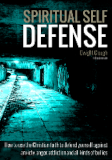
 Spiritual Self Defense, a textbook I wrote
 A Beautiful Christmas, a holiday book I designed using Adobe InDesign
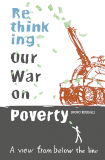
 Rethinking Our War on Poverty 2020 Edition, a book that I hope to make into a documentary
 Adding Value is a book I compiled and published over a weekend detailing ways I add value to your life
More resources
LibreOffice, a free alternative to Microsoft Word (scroll down for the most recent stable version)
Download GIMP, a free alternative to PhotoShop
How I Sold 1 Million eBooks in 5 Months

Dan Poynter’s Self-Publishing Manual: How to Write, Print and Sell Your Own Book (Volume 2)

1001 Ways to Market Your Books: For Authors and Publishers, 6th Edition

About Dwight Clough

I am a national award-winning writer, published author (20+ books), ghostwriter, and publishing consultant. Since 1983, I have worked on a wide range of writing projects for thousands of enthusiastic clients. I’ve helped clients write, rewrite, and publish their books.
I specialize in Christian inspirational, life story, devotional, educational and leadership books, but I’ve worked on other book projects ranging from microbiology to mental health.
You can reach me here:
Course index
Introduction: How to write and publish your book
Lesson #1: 7 Easy Steps to writing and publishing your book
Lesson #2: 7 questions you must answer before you write your book
Payment page: Before moving on
Lesson #3: Avoid these 9 common mistakes made by first-time authors
Lesson #4: What options are available to first-time authors?
Lesson #5: Is your writing good enough to be published?
Lesson #6: How to get it done: Advice for tackling your first book
Lesson #8: Elements of your book
Lesson #9: Designing your book inside and out
Lesson #10: Publishing your paperback book for free