Bookmark this page so you can find it again easily. A course index is below.
Please don’t share this page with others as it is intended only for those who have purchased Dwight Clough’s How to Write and Publish Your Book course…
Lesson #3
Avoid these 9 common mistakes made by first-time authors
Mistake #1: Signing contracts you should never sign
After putting hundreds of hours of work into a book, many first-time authors sign contracts with “publishers” who are little more than rip off artists. The contract gives the author a certain number of books at an inflated price. It often takes away the author’s rights to their own copyrighted material. Sometimes the contract even takes away the author’s rights for any other books he or she writes.
Avoid this mistake by doing your homework, getting good advice, and not allowing yourself to get drawn in by a high-pressure sales presentation. You can publish your book for free, if you know how. Even if you don’t know or don’t want to do it yourself, there’s no reason to spend thousands of dollars getting your book published.
Know what you’re signing, and don’t sign away your rights unless you are advised to do so by an experienced agent, a literary attorney with experience in publishing, or some other competent professional who is acting with your best interests in mind.
Mistake #2: Assuming books get published and sell because they are well written
Sorry. Wish it were true. Books should be well written. If everything else is equal, then a well-written book will do better than a poorly-written one. But everything else is not equal. The single most important factor is platform—that is, the number of people you influence. The more people you already influence, the more likely your book will become a best seller. If the president of the United States writes a book, almost any major publisher would jump at the chance to publish it, and the book will sell hundreds of thousands, even millions of copies. If your neighbor down the street writes a much better book, that author will need to work much, much harder to get the same kind of sales. The playing field is not level. Every serious author needs to be thinking about platform.
By the way, if you work with an agent and/or a traditional publisher, be prepared to answer questions about platform. How many people can you influence to buy and read your book? How will you do it, and why will they go along with it?
Mistake #3: Writing the book before creating the plan
This is probably the most common mistake first-time authors make. Writing a book is a big job. It’s so easy to become so focused on that job, that you never take the time to step back and look at the big picture. Why are you writing this book? What do you want to accomplish with it? How will you define success? Who is your reader? What is your reader looking for and why? How will you reach your reader? These kinds of questions influence the decisions you will make as you are writing the book. You don’t want to finish writing your book only to discover that you’ve written the wrong book. As the old saying goes, “Measure twice, cut once.” In the same way, plan first, then write the book.
Mistake #4: Failing to write for the reader
When you write a journal, you write for yourself. But when you write a book, you write for someone else. You are providing a service to your reader. You may be entertaining, or informing, or persuading, or inspiring, but you are writing for your reader. Word choice, syntax, format, visuals—all of that matters because it matters to your reader. Your book succeeds when it succeeds with your reader. Many first-time authors overlook the importance of writing for their readers, and, as a result, their books don’t get the traction they need.
Mistake #5: Selling one book at a time
Here’s the problem with selling one book at a time: It’s too time-consuming and it’s too expensive. It’s much easier to sell multiple products and services to a single customer than it is to sell the same product to multiple customers. Have a plan that allows you to sell in bulk or to sell again and again to the same customer.
Mistake #6: Failure to build a platform
If success for you is spelled out in sales or the influence your book needs to have, you need to work on developing a platform—that is, a growing group of people that look to you to provide entertainment, expertise or information. I recommend the book Platform by Michael Hyatt as a great first resource for this. See the link below in the resources.
Mistake #7: Poorly designed book interior
If you self publish, you’ll probably design your own book’s interior. Most beginning authors get it wrong. The margins you use, the font you use, the spacing you use, whether you justify the margins—all of these things matter. Research shows these things profoundly affect how people respond to your message or whether they even understand what you’ve written. Read Type and Layout by Colin Wheildon. See the resources below. We’ll get into the nuts and bolts of this in Lesson #9.
Mistake #8: Ignoring intellectual property restrictions
I see this all the time. You can get away with posting some things on social media that you will never be able to publish in a book. That image you thought you could use—if you’re not sure you have the rights to it, you can’t use it. If the image contains a recognizable person, you need written permission from that person (a model release) as well as written permission from the photographer or artist.
You can get around some of this by going to sites like unsplash.com that offer royalty free images with no attribution requirements. However, I still strongly recommend you include an attribution. Here’s why. If the person who put the image on unsplash.com didn’t own the rights to the image, you can at least argue that you made an honest mistake in good faith based on the information that was available to you. And, if the image contains a recognizable person, you still need a model release. Sometimes, you need permission to include certain landmarks or objects in your images even if you take the photo yourself. A famous example is the Hollywood sign.
hollywoodsign.org/filming-the-sign/
Is part of your book based on material you’ve downloaded online? I’ve seen authors try to put together a book based on articles and posts they’ve downloaded from many different sources on the Internet. You can’t do that. It’s called plagiarism; it’s illegal; you can get sued and/or fined. Unless you get written permission to use someone else’s writings, you can’t use them except for quotes that adhere to the fair use law.
copyright.gov/fair-use/more-info.html
The problem here is that the boundaries of this law are not always clear, and the courts are left to decide what could constitute a violation. I remember that someone (a journalist, I think) lost a lawsuit because he quoted one page of Gerald Ford’s autobiography—one page out of hundreds—but it happened to be the page where former President Ford explained why he pardoned former President Nixon. The courts reasoned that the journalist’s use of that material would result in the sale of fewer copies of the autobiography, and therefore was a violation.
While the following guidelines are not foolproof, I have a policy of never quoting more than 10% of an original source, and not allowing more than 20% of my finished work to be composed of direct quotes from others. If you want to quote more than that, you need to get written permission from the original source. And you definitely need written permission to use graphs, diagrams, comics, song lyrics.
Since I work extensively with Christian authors and the Christian market, my clients often quote from the Bible in their books. If you do, here’s what you need to know: You can quote a limited number of Bible verses, but you need to include a copyright notice on your copyright page as prescribed by the version(s) you are quoting. One way to get the correct copyright notice is to visit
Click on the version you want to quote, and then click on the “COPYRIGHT” tab. Then include the text in the copyright page of your book. For example:
Scriptures marked NIV are taken from THE HOLY BIBLE, NEW INTERNATIONAL VERSION®, NIV® Copyright © 1973, 1978, 1984, 2011 by Biblica, Inc.® Used by permission. All rights reserved worldwide.
Keep in mind: Words are copyrighted; ideas are not. Your purposes for writing your book should be unique to you. You offer a unique angle that your source material did not offer. (If you don’t, why are you writing the book?) Therefore, you can take ideas that you gain from others, reword them, reorganize them so they fit your purposes, and inject your own original thought in them. I recommend you refer readers to the original source for more information. If you draw on their ideas in this way, that’s a win for both of you.
Mistake #9: Failing to think outside the box
Do you really need to work with a traditional publisher? Do you really need to sell your book in a bookstore? Do you really need to order an inventory of self-published books? Do you really need to sell your book at all? Could your book be a bridge to something else—more and better clients, another more expensive product or service, a series of books? Could your book be serialized? Could it help a manufacturer sell a product? What assumptions are you making that maybe you don’t need to make? Give yourself room to think creatively.
Assignment:
Get a sheet of paper and brainstorm. See if you can come up with at least twenty different ways you can use your book to benefit others (and yourself). I’ve offered a few possibilities; what can you come up with?
Coming up!
In our next lesson, we’ll talk about options available to first-time authors—options for getting your message out, types of books, types of publishing, hired help that’s available, and we’ll touch on a few marketing options (much more in Lesson #7)
Course index and link to next lesson are below
Recommended resources and sample books
Yes, these are referral links so there is a danger that I might make money if you click through and purchase…

 On Writing Well, a classic guide for improving your writing
 Elements of Style, no writer should be without this book.
 Save the Cat: Yes, it is a book about screenwriting, but I’ve seen nothing better for writing fiction.
 Nondesigners Design Book takes the mystery out of graphic design
 Type and Layout will help you make your book more readable.
 Guerrilla Marketing, the classic guide for marketing on a shoestring budget
 Platform, a great book about building a following
 The Man from Sun Prairie, a novel I wrote
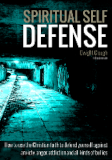
 Spiritual Self Defense, a textbook I wrote
 A Beautiful Christmas, a holiday book I designed using Adobe InDesign
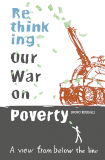
 Rethinking Our War on Poverty 2020 Edition, a book that I hope to make into a documentary
 Adding Value is a book I compiled and published over a weekend detailing ways I add value to your life
More resources
LibreOffice, a free alternative to Microsoft Word (scroll down for the most recent stable version)
Download GIMP, a free alternative to PhotoShop
How I Sold 1 Million eBooks in 5 Months

Dan Poynter’s Self-Publishing Manual: How to Write, Print and Sell Your Own Book (Volume 2)

1001 Ways to Market Your Books: For Authors and Publishers, 6th Edition

About Dwight Clough

I am a national award-winning writer, published author (20+ books), ghostwriter, and publishing consultant. Since 1983, I have worked on a wide range of writing projects for thousands of enthusiastic clients. I’ve helped clients write, rewrite, and publish their books.
I specialize in Christian inspirational, life story, devotional, educational and leadership books, but I’ve worked on other book projects ranging from microbiology to mental health.
You can reach me here:
Course index
Introduction: How to write and publish your book
Lesson #1: 7 Easy Steps to writing and publishing your book
Lesson #2: 7 questions you must answer before you write your book
Payment page: Before moving on
Lesson #3: Avoid these 9 common mistakes made by first-time authors
Lesson #4: What options are available to first-time authors?
Lesson #5: Is your writing good enough to be published?
Lesson #6: How to get it done: Advice for tackling your first book
Lesson #8: Elements of your book
Lesson #9: Designing your book inside and out
Lesson #10: Publishing your paperback book for free