(A little longer than usual – published by request)
Beliefs are tricky.
You can be 100% correct—
and, at the same time, terribly, horribly wrong.
Most people don’t understand this.
For centuries Christians have battled one another in an effort to nail down the correct theology, doctrine, Bible interpretation, denomination, or whatever.
More recently, the focus seems to be on WWJV—
What Would Jesus Vote or who would Jesus vote for (or against).
And, of course, we all think we’re right, that God is on our side.
But is God on our side?
Is He?
That brings me back to Joshua chapter 5: Joshua, the chosen leader, leads the people of God into the Promised Land, and walks up the road leading to Jericho. There he sees a man (or someone who looks like a man) standing in the middle of the road with a drawn sword in his hand.
Interesting.
A warrior.
So Joshua asks what—on the surface—seems like a perfectly reasonable question:
“Are you for us or for our enemies?”
The reply?
The angelic warrior, the commander of the armies of the Lord shakes his head.
“Neither.”
Let that sink in.
Because 3,400 years later, we’re still asking the same question:
Are You for us or are You for our enemies?
And without giving God time to reply, we answer for Him. Of course, You’re for us. After all, we’re right.
But if we had waited for the reply, I think we would hear: “Neither.”
I’m not here to become a tool in your machine.
Beliefs are tricky.
We very much want to believe that we are right (and you may be) and that God endorses our beliefs.
But let me see if I can explain why it’s not that simple.
Consider this simple drawing of an orange tree:
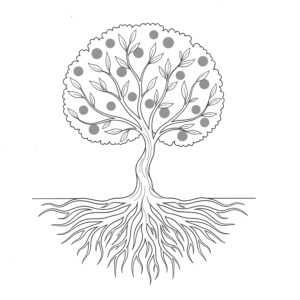
We have roots, a trunk, branches and leaves, and fruit.
The trunk is our head beliefs: our theology, our political views, our opinions and convictions on everything.
The branches and leaves are our practices, choices, policies, decisions—our deeds.
The fruit could be love, joy, peace, patience, and more of the same; or it could be impatience, moral impurity, envy, unresolved anger, and more of the same.
That brings us to the roots. The roots are our heart beliefs, our gut level beliefs—what feels true, the messages that play in the back of our minds.
We want to take that trunk to God and say, “I’m right. I believe all the correct things about religion and politics.”
But God doesn’t just look at the trunk. He looks at the whole tree.
So yeah, you and I can be 100% correct, and, at the same time, horribly wrong.
All of this gives context to a powerful passage in James:
“Who is wise and understanding among you? Let them show it by their good life, by deeds done in the humility that comes from wisdom. But if you harbor bitter envy and selfish ambition in your hearts, do not boast about it or deny the truth. Such ‘wisdom’ does not come down from heaven but is earthly, unspiritual, demonic. For where you have envy and selfish ambition, there you find disorder and every evil practice. But the wisdom that comes from heaven is first of all pure; then peace-loving, considerate, submissive, full of mercy and good fruit, impartial and sincere. Peacemakers who sow in peace reap a harvest of righteousness.” James 3:13-18 NIV
How does God decide if we’re “correct” or not?
Look at the contrast:
“Correct beliefs” or wisdom:
• good life
• humility
• purity
• peace-loving
• considerate
• submissive
• full of mercy
• good fruit
• impartial
• sincere
• peacemaking
• righteousness
“Wrong beliefs” or nonwisdom
• bitter envy
• hidden selfish ambition
• boasting (arrogance)
• denial
• earthly
• unspiritual
• demonic
• disorder
• every evil practice
With all this in mind, I want to offer a couple of observations and then a prescription.
Observation #1: Arrogance
One of the biggest obstacles to the forward movement of God’s purposes is arrogance in the people of God. I don’t know what God is doing, has done, or will do in your life to knock you off your pedestal, but believe me, He will if He hasn’t already. I say this as someone who has been humbled again and again by failure, by poverty, by embarrassing health problems, by disappointment—I don’t know how much arrogance is left in me, but I can tell you by the grace of God it’s less than it was.
I can say this to you and I can say it to me: If we’ve stopped listening, if we’re always right, if we can’t learn, if we consider other people inferior to us, we’re already wrong. Remember that Jesus rejoiced that God’s wisdom was hidden from those who thought they were wise (Matthew 11:25-26, see also Proverbs 26:12).
Observation #2: Anger
Eliphaz, who was wrong about so many things, was right when he said, “Resentment kills a fool.” There’s a reason we are told not to make friends with a hot-tempered man (Proverbs 22:24-25). Unresolved anger gives the devil a foothold in our lives (Ephesians 4:26-27); it creates a bitter root, and through it many are defiled (Hebrews 12:15).
Anger will trick us into thinking we are wise when we are not. This is particularly important if you have experienced injustice or if you belong to a group that has experienced injustice.
Here’s why: The enemy’s purpose in injustice is to mess with how you think, to warp your beliefs. He wants to keep you so focused on the hurt that you can’t see how he’s messing with your mind.
When Jesus experienced gross injustice, His response was: “Father, forgive them, for they know not what they’re doing.” Likewise, Stephen, the first Christian martyr, died forgiving. Stephen triumphed over the enemy because he died with a pure heart.
Political parties (and yes, I mean all of them) trawl for unresolved anger because they know if they can harness your anger, they will have you on their leash forever.
Years ago, I sat in a restaurant with a man who loudly complained about people of color “playing the race card.” But when I dug into his backstory, I discovered that he experienced what he believed to be great injustice when he was a child. His loud—and rather embarrassing—rant wasn’t about race at all. It was about unresolved anger, unhealed hurts.
And that brings me to a prescription:
Fix the roots first.
You cannot have a healthy tree without healthy roots. Those messages that play in the back of your mind matter. They dictate how you experience your life. They color your head beliefs (the trunk), influence your decisions (branches and leaves), and ultimately determine whether the fruit of your life will be sweet or rotten.
Fix the roots first.
Bring those hurts, all that injustice, that damaged past, those things that feel true—even though we know they aren’t—all those lies we’ve been taught to believe—bring it all to Jesus.
Not just once. But as a lifelong practice.
“What do You want me to know?” That needs to be a daily prayer.
We are broken people—you and me—but Jesus makes us whole.
Dwight
To receive these posts in via email, sign up here…